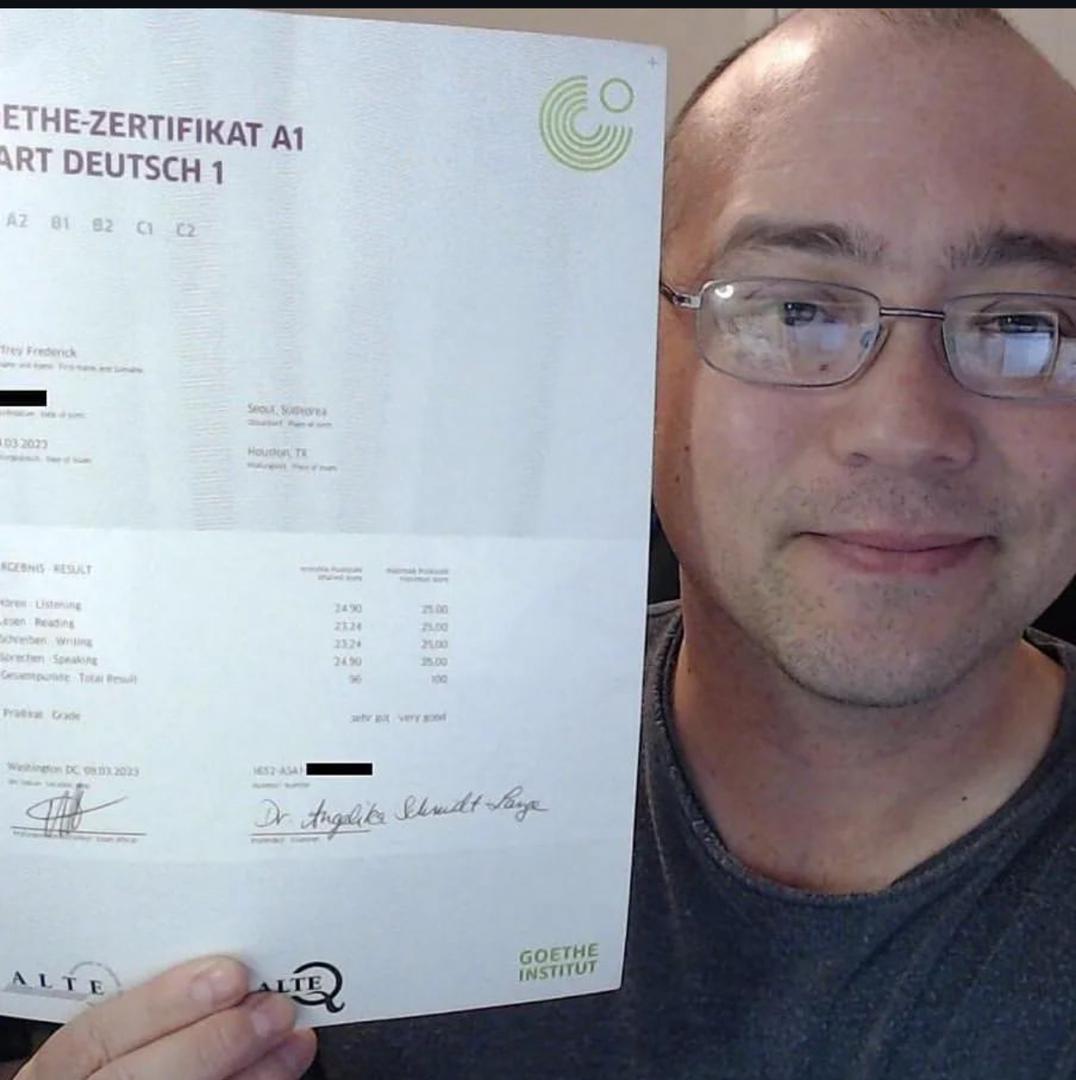
9 . What Your Parents Teach You About B1 German Certificate
Understanding the B1 German Certificate: Your Gateway to Proficiency
The B1 German Certificate, likewise known as the B1 level of the Common European Framework of Reference for Languages (CEFR), represents an intermediate level of proficiency in the German language. This certificate is significantly becoming a requirement for different academic and professional chances in German-speaking countries. For lots of individuals looking for to enhance their personal and professional life, the B1 Certificate serves as a stepping stone toward higher competencies in German and opens doors to numerous career and research study potential customers.
What is the B1 German Certificate?
The B1 Certificate is awarded to individuals who can understand and reveal themselves in daily scenarios, making it essential for interacting socially, travel, and introductory expert contexts. In this level, language users are anticipated to manage a range of tasks that need a basic understanding of German in everyday life.
Secret Features of the B1 German Certificate
Criteria
Description
CEFR Level
B1 (Intermediate)
Language Skills
Understand the bottom lines of clear standard input on familiar matters.
Speaking Skills
Able to produce easy linked text on subjects of personal interest.
Listening Skills
Effectively comprehend the main point of clear basic language broadcasts.
Checking out Skills
Understand texts that are mostly worried about daily language subjects.
Writing Skills
Write basic connected text on topics that recognize or of individual interest.
Why the B1 German Certificate Matters
Career Opportunities: Many companies in German-speaking countries require candidates to possess a B1 level of German, especially in multinational companies.
Academic Requirements: Universities in Germany and Austria may need the B1 Certificate for global students, particularly for courses taught in German.
Combination: For immigrants, the B1 Certificate can reduce the procedure of combination into German society, enabling for much better interaction and social interaction.
Personal Development: Achieving a B1 level represents a good personal accomplishment in mastering the language, supplying a sense of achievement and inspiration to advance further.
Preparing for the B1 German Certificate
Preparation for the B1 German exam generally involves a combination of structured learning and practice. Below are effective preparation methods:
1. Language Courses:
Enroll in language courses that focus particularly on the B1 curriculum. Lots of language schools offer customized programs targeted at achieving level-specific efficiency.
2. Research study Groups:
Joining study hall permits collective knowing, with fellow students supplying assistance and engaging in practice discussions.
3. Practice Exams:
Taking practice exams is crucial for acquainting oneself with the exam structure and kinds of questions. Lots of resources are available online that mimic B1 exams.
4. Self-Study:
Incorporate self-study by utilizing language-learning apps, books, and online resources focusing on reading, composing, speaking, and listening activities.
5. Immersive Experiences:
Engage in immersive experiences such as language exchange meet-ups, going to German-speaking occasions, and even taking a trip to German-speaking countries to boost speaking and listening abilities.
6. Focused Skills Development:
Break down preparation into focused skill development, devoting specific times to enhance each language skill:
Skill
Practice Methods
Resources
Speaking
Role-playing, discussion practice
Language exchange apps
Writing
Composing essays, journal entries
German language workbooks
Listening
Enjoying German movies, listening to podcasts
Online platforms like YouTube
Checking out
Reading news short articles, narratives
News sites, graded readers
The Exam Structure
The B1 German exam consists of 4 areas: reading, composing, listening, and speaking. Here's a breakdown of what to expect:
Section
Format
Duration
Description
Checking out
Several option and brief answer concerns
60 minutes
Candidates check out various texts and answer related questions.
Composing
Short compositions
60 minutes
Prospects should write a personal letter or a simple essay.
Listening
Audio understanding
30 minutes
Candidates listen to recordings and address questions based on what they hear.
Speaking
Oral interview
15 minutes
Candidates participate in a conversation with an inspector, showcasing their speaking ability.
Frequently Asked Questions (FAQs)
1. What is the passing score for the B1 German Certificate?
The passing rating might vary depending on the institution offering the exam, however usually, a rating of 60-70% is thought about acceptable.
2. How long does it require to prepare for the B1 German exam?
The time needed can vary considerably among people; usually, an estimated 300-400 hours of study is suggested for reaching B1 level.
3. What resources are recommended for B1 exam preparation?
Advised resources consist of online platforms like Duolingo, Babbel, and traditional books such as “Menschen B1” or “Themen Aktuell B1”.
4. Is it needed to take a course before attempting the B1 exam?
While it's not compulsory, taking a structured course can significantly enhance self-confidence and preparedness, especially for those who might battle with self-learning.
5. Can I take the B1 German exam online?
Yes, numerous institutions provide online screening options. It is best to examine with specific evaluation centers for accessibility.
In Conclusion
Obtaining the B1 German Certificate is a crucial milestone for anyone aiming to enhance their German language abilities. Geothe Zertifikat 4 All solidifies one's understanding of the language but also paves the method for various scholastic and career chances. With mindful preparation and strategic practice, candidates can attain this intermediate level of proficiency and confidently move toward more sophisticated language skills. Whether for individual growth or expert improvement, the B1 German Certificate represents a crucial stepping stone in the journey of language learning.